
Canada Backs Rio Tinto to Boost Scandium for Data Centres

Rio Tinto’s facility in Sorel-Tracy, Québec, is moving into commercial production of scandium oxide with backing from the Canada Growth Fund (CGF), which commits approximately C$25m (US$18m) to support expansion.
The investment raises output capacity to nine tonnes per year, positioning the site as North America’s only scandium oxide producer and a key supplier of critical materials used in high-performance manufacturing and energy systems.
For the data centre sector, which demands robust energy technologies and resilient infrastructure, the project signals a deeper integration of locally sourced, high-efficiency materials into the digital economy.
Scandium's role in data centre resilience
Scandium is a rare metal vital to the manufacture of high-strength aluminium alloys and solid oxide fuel cells. These fuel cells are increasingly explored for backup and off-grid power in energy-intensive environments like data centres hospitals and public infrastructure. As electricity use in hyperscale and edge data centres continues to grow, reliable and efficient power sources become critical.
By enhancing aluminium’s strength, corrosion resistance and heat tolerance, scandium supports lighter, more thermally efficient hardware in sectors including automotive and aerospace, but also has downstream applications in infrastructure supporting cloud computing and AI processing.
Rio Tinto extracts scandium oxide through a process that captures the element from waste streams created during titanium dioxide production. The process, developed by Rio Tinto scientists in Canada, removes the need for additional mining, reducing environmental impact while using existing industrial outputs.
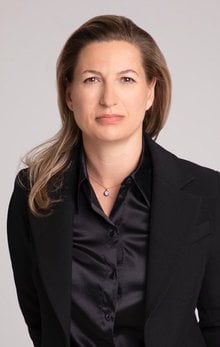
Sophie Bergeron, Managing Director of Rio Tinto Iron and Titanium and Diamonds, says: “Rio Tinto is pleased to partner with CGF and the Government of Canada to expand our Canadian production of scandium oxide, a high-performance material used for advanced manufacturing and energy generation.
"This project leverages an innovative process developed in Canada by our scientists, fully supplied from our domestic mining and metallurgical assets to provide a secure, North American supply of this critical mineral.”
The designation of scandium as a critical mineral by Canada, the US and Australia stems from its limited availability in refined form and complex extraction requirements. Despite its broad distribution in the Earth's crust, scandium usually appears in low concentrations and remains difficult to separate from other elements. This keeps global supply constrained, with China dominating current production.

From pilot to production
Until 2022, Rio Tinto’s scandium output operates at demonstration scale. The facility stands as the only source of refined scandium oxide in North America and one of few operating within the Organisation for Economic Co-operation and Development (OECD) countries.
With the CGF’s structured financial support, the facility transitions to commercial-scale production. The investment takes the form of a royalty arrangement, a structure that allows CGF to benefit from long-term value without taking ownership. The model aligns with CGF’s strategy to back projects that strengthen domestic supply chains and support Canada’s low-carbon economy.
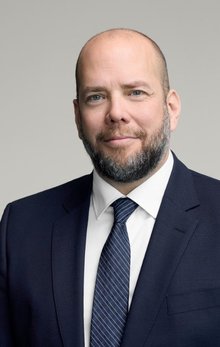
Yannick Beaudoin, President and CEO of Canada Growth Fund Investment Management, explains: “With its unique investment mandate, CGF invests into innovative transaction structures that directly support projects of strategic priorities.
"This transaction, completed alongside an established operating partner, enables us to unlock new models for risk-sharing and value creation that advance Canada’s supply chain resilience strategy.
"Our commitment to the project demonstrates how targeted investment and disciplined structuring can deliver tangible benefits for the Canadian industry and economy.”
For data centre operators, the scalability of scandium supply means potential access to more robust components and cleaner backup energy systems at a time when grid pressures and climate concerns intensify.
Anchoring supply with government partnerships
The expansion receives further backing through two commercial agreements with the Government of Canada. The first is an offtake agreement that secures government purchase of fixed volume of scandium oxide. Offtake agreements help producers establish consistent demand and financial stability, essential when moving from pilot to commercial scale.
The second agreement focuses on marketing and storage. Under this arrangement, Rio Tinto works with the government to store and sell scandium oxide as sector-specific demand develops. Target industries include lightweight transportation, defence and fuel cell systems, all of which intersect with data centre supply chains through logistics, infrastructure and energy support.
In the fuel cell market, scandium boosts the conductivity of solid oxide systems, improving efficiency and reliability. As data centre developers explore alternatives to diesel generators for backup power, solid oxide fuel cells offer a quieter, cleaner option that aligns with carbon reduction goals and operational uptime standards.
Deborah K Orida, President and CEO at PSP Investments, which supports CGF’s mandate, says: “We are delighted to bring PSP Investments’ rigorous investment process, depth of expertise and arm’s length governance model to the execution of CGF’s mandate.
"CGF continues to provide innovative solutions that enable the development of important projects, improving Canada’s investment climate and contributing to PSP’s foresight on the evolution of the critical minerals supply chain.”
Canada’s strategic focus on critical minerals supports a wider industrial policy aimed at boosting domestic resource capacity, aligning public-private collaboration and reducing reliance on foreign supply chains.
As demand for high-performance materials grows across energy, digital infrastructure and advanced manufacturing, the expansion of Rio Tinto’s scandium operations builds resilience into Canada's role in the global technology ecosystem.
For the data centre sector, this approach not only secures access to future-ready materials but also promotes sustainability by integrating low-impact processes into the digital supply chain.
Company portals

Executives
Sophie Bergeron
Managing Director of Rio Tinto Iron and Titanium and Diamonds
Yannick Beaudoin