How Eco Wave Power Uses NVIDIA Tech to Generate Clean Energy
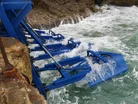
The search for new energy sources is taking data centre operators to some unusual places.
One company believes the most sustainable answer could be rolling in with the tide.
With the help of NVIDIA Omniverse's digital twins, Eco Wave Power is developing wave energy technology designed to convert the movement of ocean waves into electricity.
As more data centres are built near coastlines to access cooling and connectivity advantages, the company has seen the opportunity for wave power to become part of the future energy mix supporting digital infrastructure.
Eco Wave Power is part of the NVIDIA Inception startup programme's Sustainable Futures initiative, and is combining wave energy systems with AI-driven modelling and digital twin technology to optimise deployment and operations.
"Wave energy is one of the largest renewable energy sources that exists," says Inna Braverman, Cofounder and CEO of Eco Wave Power.
"Everybody wants it, but nobody can do it, so I looked at the current problems with harnessing wave power and I asked: How do we simplify it?"
How does Eco Wave's solution work?
One of the biggest challenges facing data centre development today is access to power.
In many markets, grid connections can take years to secure as utilities grapple with rising demand and infrastructure constraints.
Eco Wave Power's approach focuses on using existing marine infrastructure such as breakwaters and sea walls.
Floating devices attached to these structures capture wave movement, while the control systems, hydraulic equipment and electrical components work onshore.
The design addresses one of the historical challenges of wave energy projects: protecting critical equipment from harsh ocean conditions.
According to the company, keeping computing and electrical infrastructure on land reduces exposure to storms and heavy seas while also simplifying maintenance.
Wave energy offers a different generation profile from some other renewable technologies.
"Wave energy is the least intermittent source of renewable energy," Inna says.
"Solar energy, for example, is great – but you have night, winter, cloud coverage and pollution that all impact production.
"With wave energy, you can generate around the clock."

Using AI to optimise energy production
Beyond generating electricity, Eco Wave Power is applying AI technologies to improve how wave energy systems are designed and operated.
Digital twins built using NVIDIA Omniverse libraries allow engineers to model wave conditions, infrastructure performance and deployment scenarios before construction begins.
These simulations can be used to test different configurations and identify potential operational challenges.
Once systems are deployed, AI and accelerated computing can analyse equipment performance, wave patterns and environmental conditions in real time.
The wider aim is to improve efficiency and optimise energy generation while supporting predictive maintenance.
Could wave-powered data centres be a reality?
One of the most intriguing aspects of Eco Wave Power's work may be its efforts to connect wave energy directly to digital infrastructure.
The company currently operates projects at Jaffa Port in Israel and the Port of Los Angeles, while additional developments are underway in Portugal, Taiwan and India.
Inna Braverman believes coastal data centre development creates a natural opportunity for wave energy integration.
"We have a possibility to link AI factories directly to wave energy, because a lot of data centres are moving toward the coast," she says.
"They need cooling and water, so they're now located in ports."
That idea is already being tested in Los Angeles, where pilot projects are exploring whether wave energy could serve as the sole power source for a data centre without drawing electricity from the grid.
The project uses AI software to forecast wave conditions and allocate computing tasks according to expected power availability.
If stronger wave activity is forecast, more energy-intensive workloads can be scheduled during those periods.
While still at an early stage, the message from Eco Wave's pilot is that wave energy is now becoming a real source of clean electricity.
"We exist, we work, we're grid connected and we have so much of this resource," Inna says.
"The energy is needed now, so I think we're in the right place at the right time and we're innovative, but we're not futuristic, and that's what sets us apart."
Company portals


Executives
Inna Braverman
Co-Founder & CEO