Why Data Centres Are at Heart of Saudi's $1.5tn Neom Rethink
Saudi Arabia's ambitious Neom development is evolving beyond its original vision, with a shift towards becoming a global hub for data centres and AI research, backed by substantial investment in digital infrastructure.
The US$1.5tn Neom development represents one of the most ambitious construction visions in modern history. While the project's original scope is being recalibrated, its core mission remains intact. Leaders are increasingly prioritising digital infrastructure and high-value technological segments.
The flagship project includes plans for a city named The Line. It consists of a vast stretch of 500-metre skyscrapers in the desert. Construction timelines are being reconsidered as leaders evaluate a more realistic approach to delivery. There is greater emphasis on projects that offer immediate economic returns, such as luxury tourism and digital infrastructure.
The birth of Neom is linked to HRH Crown Prince Mohammed bin Salman's Vision 2030. This is a strategic framework designed to end the Saudi Arabian economy's dependence on oil. Funded primarily by the Public Investment Fund (PIF), Neom is positioned as the "crown jewel" of the Kingdom's Giga-projects.
However, with oil prices fluctuating and the Kingdom managing budget considerations, the "100-mile linear city" dream of The Line has been re-evaluated. The focus has shifted towards segments that could deliver more immediate value, particularly in digital infrastructure and AI computing.
Global engineering firms mobilise resources
The scale of Neom has demanded the involvement of leading global engineering and construction companies. The project represents one of the world's largest customers for civil engineering services. Key international and domestic businesses are securing multi-billion dollar contracts.
Italian contractor WeBuild is spearheading the US$5bn dam project at Trojena. This includes the construction of three dams to create an artificial lake supporting the mountainside ski resort. European firms Vinci SA and ACS, alongside regional partners Nesma & Partners and Al Bawani, are involved in the backbone infrastructure of Neom. This includes high-speed rail links and underground utility tunnels.
China State Construction Engineering Corp (CSCEC) is contributing to the rapid vertical construction of residential and administrative clusters. The company is using modular construction techniques to meet aggressive deadlines.
International design firms including Zaha Hadid Architects, Morphosis and Gensler have been commissioned to develop architectural concepts. These firms are bringing cutting-edge sustainable design principles to various Neom components. The collaboration between global expertise and local execution is creating a unique construction ecosystem.
Regional contractors are also playing a vital role in workforce development and skills transfer. Saudi-based firms are partnering with international companies to ensure knowledge transfer. This approach aligns with the Kingdom's broader goals and economic diversification strategy.
Supply chain management at scale
For procurement professionals, one of the most significant developments is the US$10 bn logistics joint venture with DSV. It was established in late 2023 and became fully operational in 2024. The partnership, with 51% owned by NEOM and 49% by DSV, is responsible for end-to-end supply chain management across the entire region.
The sheer volume of materials requires a dedicated ecosystem. This includes sustainable timber, high-grade steel and sensitive AI hardware. The joint venture is currently developing an innovation centre at Oxagon. This centre will pioneer autonomous freight and carbon-neutral last-mile delivery.
For global suppliers, the Neom Supplier Portal has become a critical gateway. The project is seeking partners who can adhere to circular economy principles and environmental, social and governance (ESG) standards.
The logistics infrastructure includes advanced tracking systems and blockchain-enabled transparency for material provenance. This ensures that all materials meet strict sustainability criteria and can be traced throughout the supply chain from origin to installation.

Data centres emerge as strategic priority
The most significant strategic shift is towards AI and computing infrastructure. Recognising global demand for compute power, the PIF has unveiled HUMAIN (Hub for Manufacturing AI in Neom). This is a venture focused on transforming sections of Neom into a global hub for data centres and AI research.
The Line, while originally planned to house nine million people across 170 km, is currently focused on the first 2.4 km "starter" segment. Sindalah, a luxury island destination, is the most mature component, having officially opened to the global yachting community.
Trojena continues intensive construction as the site prepares for the 2029 Asian Winter Games. Oxagon, the octagonal industrial port, is becoming a hub for green hydrogen production and automated manufacturing.
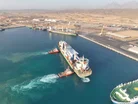
The Oxagon Port is set to be the world's first fully automated port with integrated supply chain capabilities. It is also the site of the NEOM Green Hydrogen Company (NGHC). This aims to be the world's largest utility-scale green hydrogen plant, providing sustainable power that could support energy-intensive data centre operations.
Marriott International has signed agreements to bring elite brands to Neom. This includes a Ritz-Carlton Reserve at Trojena and W Hotels within the Lake Village. Retail in NEOM is shifting towards integrated experiential hubs. Retailers are testing frictionless shopping experiences powered by AI.
Epicon, a luxury coastal destination featuring two jagged, futuristic towers, is designed as a "digital detox" haven. This demonstrates the project's diverse approach to technology integration across different use cases.




Executives
Tareq Amin
Chief Executive Officer