Where does Jensen Huang see Nvidia in UK Data Centre Future?
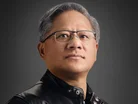
As the UK secures billions in AI investment, Nvidia CEO Jensen Huang outlines how the country can strengthen its position through digital infrastructure.
Speaking during a series of interviews and press events, Jensen says the UK has the talent and research facilities to lead but must address its lack of AI-ready data centres.
“What’s missing is the AI infrastructure,” he says, “and we are here to build it.”
Building the UK’s AI backbone
Nvidia is a core partner in the “Tech Prosperity Deal”, a package of technology investment from US companies into Britain that includes £22bn ($30bn) from Microsoft and £5bn ($6.82bn) from Google. Nvidia’s role focuses on AI infrastructure and data centres.
At London Tech Week earlier this year, Jensen warned that the UK was reaching a limit in AI growth. “It is surprising this is the largest AI ecosystem in the world without its own infrastructure,” he said.
Nvidia has now partnered with Nscale, a British data centre builder, to construct new facilities across the UK. The company has also taken an equity stake in Nscale.
Jensen says Nvidia’s goal is “building an AI infrastructure company here in the UK and then helping it scale out globally.”
Speaking at a London press conference, he added: “We convinced ourselves that Nscale could be a national champion for AI infrastructure in the UK.”
The new data centres will run on Nvidia processors and reflect Jensen’s view that such facilities are now “AI factories” rather than traditional compute sites. “You apply energy to it and it produces something incredibly valuable – and these things are called tokens,” he says. Tokens refer to the basic data units that AI systems generate and process.

Energy demands and solutions
AI’s energy requirements are a growing concern for data centre operators. Microsoft CEO Satya Nadella acknowledges that consumption is “very high” but argues the benefits outweigh the costs, particularly in healthcare and public services.
Speaking to industry analysts, Jensen elaborates: “Using AI to solve problems will use less energy than using calculation to solve problems.” He cites weather forecasting as an example, claiming AI models can predict patterns a thousand times more efficiently than conventional computing.
Nuclear power forms part of his vision. “Nuclear is wonderful as one of the sources of energy, one of the sources of sustainable energy,” he says. But Jensen stresses a balanced approach: “We’re going to need energy from all sources and balance the availability and the cost of energy as well as the sustainability over time.”
Shorter-term solutions include gas turbines that can operate “off the grid so we don’t burden people on the grid.” Jensen also suggests AI itself will help design better energy systems, including solar panels, wind turbines and fusion.
Campaign group Foxglove warns that the UK could face the costs of higher energy demand, yet Jensen insists productivity gains will offset this impact.
Supply chains and global challenges
Jensen highlights that scaling AI means scaling data centres and manufacturing supply chains. Semiconductor production remains concentrated in Asia, which creates risks.

“The ecosystem of manufacturers and suppliers to the chip industry is sprawling and complex and particularly concentrated in Asia,” he says in comments to Goldman Sachs. Companies, he argues, need “enough intellectual property” to adapt manufacturing across regions when required.
He calls building resilient supply chains a “daily challenge requiring enormous scale and scope.” Taiwan, he notes, will continue as a hub because “we’re at the beginning of a breed of a new industry. This new industry builds AI factories.”
Jensen adds that manufacturing and supply chain sectors globally will expand as AI adoption accelerates.
Global competition and UK opportunity
Geopolitics looms over AI investment. In an interview with the BBC, Jensen says he is “disappointed” by reports that China has ordered its companies to stop buying Nvidia chips. He adds the US needs “to make sure that people can access this technology from all over the world, including China.”
Despite tensions, he expects discussions to ease: “the conversation will sort itself out,” he says, while confirming he would “support the US” as it seeks resolutions.
Jensen also notes: “The advance of human society is not a zero-sum game. President Trump is very clear. He wants America to win – and President Xi wants China to win – and it’s possible for both of them to.”
For the UK, the opportunity is to build on its research and talent base by investing in its own AI infrastructure. Nvidia’s partnership with Nscale places data centres at the centre of this ambition, marking a step toward making the UK an AI superpower.