Will Guizhou Emerge as China’s AI Data Centre Powerhouse?
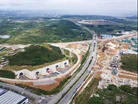
Guizhou province has rapidly evolved from a national data storage base into one of China’s most advanced hubs for AI-ready computing power.
Under the country’s “East-Data-West-Computing” strategy, the region is now a major centre for intelligent data processing and green-powered infrastructure.
With AI demand surging in 2025, Guizhou has moved early to establish itself as a computing power leader. Its capacity has reached 85 EFLOPS, with intelligent computing accounting for more than 98% of that total.
Around 90% of the hardware is domestically produced, making it one of the most powerful locally-built intelligent computing clusters in China.

Data centre scale and capability
This scale is underpinned by an extensive network of facilities.
Guizhou currently has 48 key data centres in service or under construction, including 28 large-scale sites.
These have a combined storage capacity of 25 exabytes – equivalent to around five billion HD movie files – enabling them to handle the large volumes of text, image and video data needed for AI training.
The region is shifting from a storage-focused model to an integrated compute-and-store framework, with priority on AI workloads.
This aligns with the growing need for high-density, high-performance facilities capable of supporting both cloud computing and AI model training.
Rising power demand and grid upgrades
Meeting the energy needs of this expansion is a critical challenge.
The Gui’an Power Supply Bureau reports that in the first quarter of 2025, electricity consumption in Gui’an New Area rose 54.25% year on year.
Big data centre consumption increased by over 517%.
To keep pace, the bureau has deployed new infrastructure including one 220kV substation, four 110kV substations and 130 dedicated 10kV transmission lines.
This creates a robust and reliable power network for large-scale data centre operations.
Green energy strategy
Guizhou is also making energy sustainability central to its development model.
Hydropower and coal remain the backbone of its supply, but renewable generation capacity is growing quickly.
By May 2025, installed renewable energy capacity had reached 34.98GW, or 35% of the province’s total, making it the second-largest power source.
This transition supports the needs of high-load AI and cloud facilities while aligning with China’s wider environmental goals.
In Gui’an New Area, construction began this year on a 500kV substation that will add 4GW of capacity once operational, providing dedicated support for hyperscale operators including Huawei and Tencent.
The project will create a main grid structure described as “one ring, three cores and three zones” to strengthen resilience and distribution.
Policy incentives for AI infrastructure
Government incentives have played a key role in accelerating Guizhou’s progress.
In November 2024, the province updated its Management Measures for Computing Power Vouchers, extending subsidies to domestic adaptation and AI model training services.
These cover up to 30% of eligible costs, capped at 1.5 million yuan (US$209,000) for adaptation and 5 million yuan (US$697,000) for training.
By January 2025, 177 vouchers had been issued nationwide, supporting computing power transactions worth more than 10.5 billion yuan (US$1.46bn).
This year, Guizhou plans to advance more than 7.5 billion yuan (US$1.04bn) worth of projects, including the Huawei Cloud Global Computing Center, while expanding the voucher scheme to support an estimated 12 billion yuan (US$1.67bn) in computing power business activity.

National strategy and regional impact
Guizhou’s transformation reflects the national aim of optimising resource distribution through “East-Data-West-Computing”.
Rather than simply hosting relocated facilities from eastern China, the province is building a high-capacity, AI-ready ecosystem that combines infrastructure, energy and policy to support next-generation digital services.
The combination of large-scale data centres, resilient power supply, renewable energy adoption and financial incentives positions Guizhou as a model for how inland regions can lead in China’s digital economy.
Its trajectory shows how green computing power can underpin coordinated regional growth in the AI era.