Rolls-Royce Launches New Data Centre Engine in China
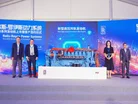
Rolls-Royce Power Systems has started production of its mtu Series 2000 G06 engine in China, with the first deliveries set to reach customers shortly.
The launch marks a milestone in the company’s localisation strategy, bringing manufacturing closer to one of its fastest-growing markets for mission-critical power solutions.
The engine is produced at MTU Yuchai Power (MYP), a joint venture between Rolls-Royce and Chinese manufacturer Guangxi Yuchai Machinery Co. Ltd. The Suzhou facility, part of the joint venture’s expanded operations, now builds the G06 for power generation applications across China and neighbouring regions.

Engineered for mission-critical power
Designed for applications where reliable power is essential, the mtu Series 2000 G06 is aimed at sectors including data centres, industrial parks, power stations, rental fleets and large-scale infrastructure.
The engine offers high power density, strong fuel efficiency and dependable operation – key requirements for modern hyperscale and enterprise data centres where uptime is imperative.
At the launch event, Rolls-Royce signed agreements with more than ten original equipment manufacturers (OEMs) in the power generation sector.
These agreements span applications from building standby systems and mobile power trucks to engineering, procurement and construction (EPC) projects, reflecting broad demand for locally manufactured high-performance engines.
Commitment to Chinese production
Tobias Ostermaier, President of the Stationary Power Solutions division at Rolls-Royce Power Systems, attended the launch and underlined the significance of the development.
“I am delighted to witness another milestone for Rolls-Royce Power Systems in China, which reflects our long-term commitment to the Chinese market,” says Tobias.
“The newly produced mtu Series 2000 engines are the latest generation of high-performance diesel engines manufactured locally in China, adhering to the same production standards as those made in Germany.
"At the same time, they will be supported by our local after-sales team, significantly improving response efficiency and delivering a lower total cost of ownership for our customers.”
The combination of local production and local service aims to improve turnaround times for support, a critical factor for data centre operators who face high costs from even short outages.
Expanding reach across industries and regions
Amy Zhou, General Manager of Rolls-Royce Power Systems Greater China, highlighted both the domestic and export potential of the G06.
“These innovative engines will not only play a vital role in domestic applications such as data centres, power rental, mobile power truck, mining bidding and industrial infrastructure, but will also serve overseas projects, providing reliable power solutions to neighbouring regions,” explains Amy.
“This achievement is another successful outcome of our collaboration with Yuchai, it is a vivid reflection of our ‘Technology Synchronisation, Service Homology’ localisation strategy.
"The trust of our customers is the best affirmation of our technical strength and service capabilities. We look forward to further stimulating market demand and significantly expanding our market share with these products,” she says.
A decade of joint venture progress
The joint venture between Rolls-Royce Power Systems and Yuchai was formed in 2014. Four years later, in April 2018, the first mtu Series 4000 engine rolled off the production line at Yuchai. Since then, more than 3,000 mtu engines have been built by the partnership.
In 2024, the companies expanded the scope of the joint venture to cover additional product lines. Alongside the new Series 2000 G06, the facility now produces the 4000 Series S83 engines, supplying power for applications in oil and gas, as well as power generation across China.
With the addition of the G06 to its locally manufactured portfolio, Rolls-Royce aims to strengthen its role in China’s growing market for resilient power solutions – a market increasingly driven by the expansion of hyperscale and enterprise data centres requiring secure, high-performance backup systems.