
Is Riga the Baltics' Answer to AI Data Centre Demand?
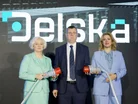
Riga is making a stronger case as the Baltics’ response to rising AI data centre demand, as Delska brings a new 10MW facility online, designed for high-performance computing and AI workloads.
The launch of EU North Riga LV DC1 adds to a growing cluster of data centres in the Latvian capital, at a time when operators and enterprises are looking beyond Europe’s traditional hubs for available capacity.
With constraints tightening in core markets, Riga is gaining traction as a viable alternative for high-density infrastructure in the Baltics.
Purpose-built for AI and HPC applications, the facility reflects a shift in how data centres are being designed, prioritising power density and scalable architecture to support increasingly intensive workloads.

A milestone for Latvia’s digital infrastructure
Daiga Mierina, Speaker of the Parliament of Latvia, positioned the project as a key moment in the country’s digital development.
At Delska's official launch event, she said: "Two years ago, I had the honor of attending the topping-out ceremony of the new Delska data center and today marks the beginning of a new chapter in Latvia's IT sector.
"I am confident that EU North Riga LV DC1 will become a significant milestone in Latvia's digital development, proving our ability not only to follow global trends but also to actively shape them."
The facility is expected to contribute to Latvia’s economic development while reinforcing its ability to support advanced computing workloads.
Built for AI and high-density computing
EU North Riga LV DC1 has been engineered to support the increasing requirements of AI and HPC deployments. These workloads place significant demands on infrastructure, particularly for power availability and thermal management.
Delska used the launch ceremony to outline the facility’s design and operational approach, alongside contributions from partners including Dell Technologies, 11Stream and Veeam.
The discussions focused on sovereign computing, data portability and the role of data centres in national resilience strategies.
Delska's new facility is already preparing infrastructure for its first customers, reflecting strong interest from both regional and international organisations. For many, Riga offers a combination of available capacity and a growing ecosystem that can support advanced digital workloads.
Capacity beyond Europe’s core markets
The launch also highlights the growing importance of secondary markets in addressing Europe’s data centre capacity gap.
As demand continues to rise, particularly from AI-driven applications, established hubs are facing increasing pressure on power and space.
Evika Silina, Prime Minister of Latvia, pointed to the broader significance of the project in attracting investment and supporting national resilience.
She said: "The opening of the Delska data center is a strong signal of Latvia's economic maturity and its ability to attract secure, high-added-value investments.
"It demonstrates that Latvia is a stable and reliable location for future-oriented projects. Today, digital infrastructure forms the foundation of both economic resilience and national security.
"This project is also an example of how technological development can be combined with sustainability."
Strengthening Riga’s role in the Baltics
With EU North Riga LV DC1 now operational, Delska is adding to Riga’s existing data centre footprint and reinforcing its role within the Baltic region.
The facility is expected to support a range of AI and HPC use cases, while contributing to the city’s appeal as an alternative to more constrained European markets.