
SK Telecom Plans for South Korean Data Centre and AI Hub
SK Telecom has announced plans to construct an AI data centre footprint reaching a total capacity of 15GW.
The telecommunications provider is undertaking this development to establish South Korea as a primary digital infrastructure hub within the Asian market. This initiative proactively builds domestic computing capacity to support the increasing requirements for AI model training and inference. The company views high-performance computing infrastructure as a critical determinant of national economic competitiveness.
SK Telecom is aligning this development with the South Korean government's "AI G3" strategy. This government initiative aims to position the country as a top three global power in AI alongside the US and China. The project also addresses governmental objectives for balanced regional economic development.

SK Telecom is comprehensively evaluating core infrastructural elements including power availability, geographical siting and operational frameworks for the proposed facilities.
Expanding regional capacity targets
The capacity expansion programme begins with a site currently under construction in Ulsan. SK Telecom will develop a cluster exceeding 2GW across the southeastern Gyeongsang region. The company intends to utilise this specific base to attract infrastructure demand from international technology companies to South Korea. A further 1GW development is planned for the southwestern Jeolla region. These initial phases will bring the domestic capacity to 5GW.
The company will activate these initial facilities in scheduled stages starting in 2029. Reaching the final 15GW target requires substantial capital expenditure. SK Telecom estimates constructing a standard 1GW AI data centre requires an estimated project cost reaching KRW70tn (US$45.6nn). This high expenditure reflects the costs associated with deploying high-performance computing components alongside current pricing levels for memory hardware.
SK Telecom expects to finance this extensive development through internal corporate investment, strategic partner contributions, long-term customer contracts and dedicated project financing. The company plans to select subsequent sites and secure anchor tenants by aligning with strategic supply plans.
Addressing global supply constraints
A primary driver for this scale of infrastructure development is an anticipated shortfall in global data centre supply.
According to consultancy firm McKinsey & Company, global data centre demand is forecast to increase by between 19% and 22% annually. This sustained growth trajectory is expected to outpace new supply creation. The consultancy estimates a resulting capacity shortfall of approximately 15GW in the US alone by 2030.
Consequently, large technology companies are expanding their infrastructure investments beyond the US to international locations. South Korea presents specific structural advantages for these deployments. The country maintains a strong manufacturing position in core artificial intelligence components, including high-bandwidth memory (HBM).
The domestic energy grid offers stable power conditions – supported by baseload nuclear energy and liquefied natural gas generation.
Furthermore, the country possesses established gigawatt-class infrastructure operating capabilities developed through the historical management of large-scale semiconductor fabrication plants.

These factors combine to position the country as an attractive destination for targeted infrastructure investment.
Coordinating corporate delivery capabilities
Delivering this complex infrastructure requires a combination of semiconductor supply, energy solutions and operational expertise. SK Group holds these core capabilities across its various corporate affiliates. The development programme will combine these full-stack resources, with each affiliate contributing specific technical strengths. SK Telecom will function as the primary architect for the overall project, leading the design, construction and operation phases for the planned data centres.
The telecommunications provider has established an operational framework for this sector and maintains active cooperative relationships with international technology firms.
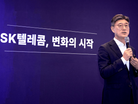
"This AI data centre project is aimed at preemptively preparing the computing infrastructure that the global AI ecosystem needs," says Jung Jai-hun, President and CEO of SKT. "We will work closely with the government, industry, and local communities to help Korea grow into Asia's core AI infrastructure hub."
During the SK AI Summit 2025 held last November, Jung detailed the company's broader roadmap. The presentation included a blueprint for expanding global cooperation and scaling up the initial Ulsan facility to exceed 1GW. SK Telecom also recently announced plans to operate a next-generation facility designated as an AI Factory. The company plans to begin operations at this site in 2027 before expanding it to gigawatt scale.
The domestic technology sector expects these data centres to function as a national strategic asset. Linking these digital facilities with regional industries is expected to support broader economic development goals. SK Telecom considers this development to be South Korea's third major national infrastructure revolution, succeeding the construction of the Gyeongbu Expressway in 1968 and the deployment of high-speed internet networks in 1998.
Company portals


Executives

Jung Jai-hun
CEO and President