How NVIDIA is Planning Gigawatt AI Capacity in South Korea
NVIDIA is strengthening its position in the AI infrastructure market through a series of agreements in South Korea that span memory supply, data centre development and AI-powered industrial systems.
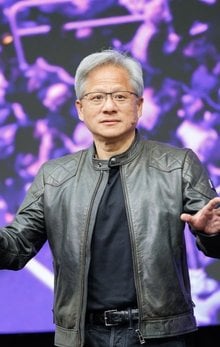
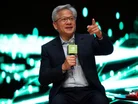
During a four-day visit to Seoul, NVIDIA's CEO, Jensen Huang, secured agreements with SK hynix, SK Telecom, Naver, Doosan Group, LG Group and Hyundai Motor Group.
The financial terms to the partnerships are yet to be disclosed.
Perhaps one of the most significant of those is a multi-year memory supply agreement with SK hynix, one of the world's largest memory chip manufacturers.
Memory supply supports AI infrastructure
Under the arrangement, SK hynix will provide memory chips for NVIDIA products used in robotics, personal computers and supercomputers, with the option to extend the partnership beyond its initial two-year term.
The deal follows a meeting between Jensen Huang, CEO of NVIDIA, and Chey Tae-won, Chairman of SK Group, the parent company of SK hynix.
SK hynix competes directly with Samsung Electronics and Micron Technology in the global memory market, as manufacturers seek to keep pace with growing demand linked to AI deployments.
Jensen Huang, CEO of NVIDIA, said: “We already procure and we buy from SK hynix already billions and billions of dollars each year and it is going to grow substantially.”
Gigawatt-scale data centre plans take shape
Alongside the memory partnership, NVIDIA is working with several South Korean organisations on AI data centre projects.
SK Telecom plans to build a gigawatt-scale AI cloud in South Korea using NVIDIA technology, with the first AI data centre expected to begin operations in 2027.
The scale of the project illustrates the level of infrastructure required to support advanced AI services and large-scale model training.
Naver and Doosan Group are also preparing to deploy NVIDIA technologies across AI data centre initiatives. In addition to its infrastructure plans, Doosan intends to implement NVIDIA physical AI technology within its own operations.
These projects reinforce South Korea's role in the wider AI infrastructure landscape.
The country is already a major producer of semiconductors, electronics and industrial technologies, placing it in a strong position to support growing data centre demand.
These partnerships create opportunities for NVIDIA to expand its technology footprint beyond hardware supply into cloud infrastructure, AI platforms and data centre ecosystems.

Data centres connect with industry and mobility
NVIDIA's discussions in South Korea also extend into industrial and mobility sectors, where AI infrastructure underpins operations.
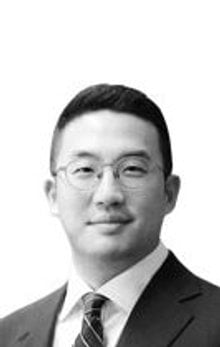
During meetings with Koo Kwang-mo, Chairman and CEO of LG Group, NVIDIA explored collaboration around electronics, mechanical systems and AI applications for humanoid robotics.
Jensen said: "We are working with them in motor technology as well as mechanical systems so that we can bring together humanoid robotics and the future of robotics."
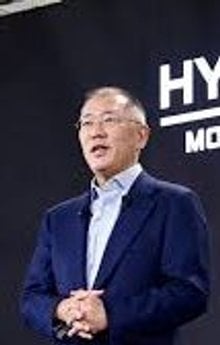
NVIDIA also expanded its relationship with Hyundai Motor Group following discussions with Euisun Chung, Executive Chair of Hyundai Motor Group.
The partnership covers autonomous mobility, robotics and AI-powered manufacturing, all areas that depend on large-scale computing infrastructure and advanced data processing capabilities.
Jensen discussed Hyundai Motor Group's planned AI data centre in Saemangeum, South Korea, describing it as an AI Valley comparable to California's Silicon Valley.
He also pointed to opportunities to accelerate industrial robotics development through the collaboration.
The announcements come during a period of market volatility.

South Korea's Kospi index, which benefits from the strong performance of companies including SK hynix and Samsung Electronics, fell 8.3% after US jobs data affected expectations around Federal Reserve interest rate policy.
Samsung Electronics shares closed down 10.2%, while SK hynix shares fell 7.7% amid a broader technology stock selloff.
Asked about the decline in chip stocks, Jensen remained optimistic, saying: "Everybody should be very excited; they can now buy stock at a cheaper price and it is absolutely true that the future of AI is very bright."





Executives
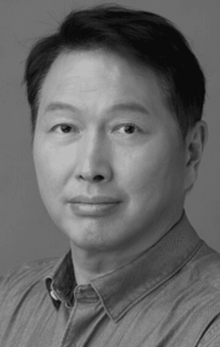
Chey Tae-won
Chairman
Euisun Chung
Executive Chair
Jensen Huang
Founder and CEO
Koo Kwang-mo
Chairman and CEO