Can Data Centre Growth make Rolls-Royce UK's Biggest Firm?
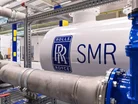
Rolls-Royce is preparing to become the first company in the UK to use nuclear energy to power AI operations, with a plan centred on Small Modular Reactors (SMRs).
These smaller-scale nuclear plants could provide the clean, stable energy needed to support the rapidly growing demand from AI and the data centres that run it.
Fossil fuels currently supply 56% of the power for data centres globally according to the Environmental and Energy Study Institute. Rolls-Royce aims to reduce that dependency by using SMRs to feed its own AI needs and potentially the wider market.
Tufan Erginbilgic, CEO of Rolls-Royce, told BBC News: “There is no private company in the world with the nuclear capability we have. If we are not the market leader globally, we did something wrong.”
Building the SMR fleet
SMRs produce up to 300 MW of electricity and can be built faster than traditional nuclear power plants. Rolls-Royce has signed agreements to develop three SMRs in the UK and six in the Czech Republic. Tufan estimates the world will need around 400 SMRs by 2050 to meet growing demand for clean, reliable energy.
The Information Technology and Innovation Foundation describes SMRs as the future of nuclear power – a more efficient and cost-effective option than larger reactors. The US is already moving forward, with Google partnering with Kairos Power to bring its first SMR online by 2030 to meet clean energy needs for AI expansion.

Rolls-Royce says each of its SMRs will generate 470 MW of low-carbon energy, equivalent to the output of 150 onshore wind turbines or enough to power one million homes for at least 60 years.
The company projects that its SMR programme could contribute up to US$73bn to the UK economy between 2025 and 2105, with 90% of manufacturing and assembly taking place in UK factories. This approach could help maintain production quality, reduce on-site disruption and support international rollout.
By 2050, the SMR programme is expected to create 40,000 jobs in the UK.
AI integration and energy optimisation
Rolls-Royce says it has been using AI since 1999 to predict maintenance and schedule care for aircraft engines.

Today, AI robots carry out quality checks on critical components in its manufacturing facilities, and the company works with R2 Data Labs to use data for performance improvement, customer value creation and digital culture development.
To minimise the environmental impact of AI operations, Rolls-Royce employs technology such as mtu EnergetIQ, which determines the ideal energy mix for operations. This system takes into account weather forecasts, electricity prices and specific energy requirements, recalculating automatically to optimise performance.
Jan Henker, Senior Expert Automation and Controls at Rolls Royce, says: “If you want to achieve perfect interplay in leveraging the strengths of the different technologies, not just today, but tomorrow, next week and beyond, then what you need isn’t a fixed operating strategy but one that constantly recalculates itself automatically. That requires an over-arching, data-driven solution – in other words, the optimiser function of mtu EnergetIQ.”
Nuclear energy for AI-powered growth
For data centres supporting AI workloads, the appeal of SMRs lies in their ability to provide stable, low-carbon power without the intermittency of some renewable sources.
Reliable nuclear energy could help the sector meet net zero targets while accommodating the huge processing demands of AI.
Rolls-Royce’s SMRs are designed to be modular, meaning key components are built in controlled factory environments before being transported to site for assembly. This reduces construction times and could speed deployment in regions where AI data centre growth is outpacing the availability of sustainable energy.
Tony Blair, Executive Chairman at the Institute for Global Change, says: “SMRs can be a cornerstone of the long-term, secure and low cost decarbonised energy system that can power the future economy.”