
This Week's Top Five Stories in the Data Centre Industry

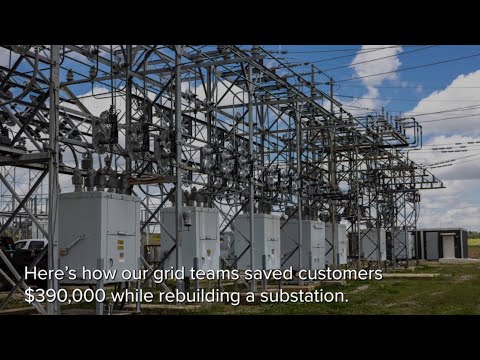
Entergy Louisiana and Meta have expanded an agreement to supply power to a hyperscale data centre in Richland Parish, placing data centre demand at the centre of energy planning. The updated deal delivers around US$2.65bn in customer savings over 20 years, with US$2bn tied to the latest agreement and US$650m linked to an earlier arrangement.
The structure of the agreement places the cost of new infrastructure on Meta, a key issue as hyperscale data centres require increasing levels of electricity. The approach aims to prevent existing customers from absorbing the cost of expanding capacity to support digital infrastructure.
What are Digital Realty’s Plans for $3.25bn Hyperscale Fund?
Digital Realty has confirmed the final close of its first US hyperscale data centre fund, securing US$3.25bn in equity commitments from global institutional investors. The fund focuses on the ownership and development of hyperscale data centres across Tier I markets, placing data centre capacity expansion at the centre of its strategy.
The company is targeting major US metros including Northern Virginia, Santa Clara, Dallas, Atlanta, Charlotte and New York – locations that serve as core hubs for cloud computing and enterprise workloads.
Digital Realty will retain a 20% stake in the fund’s portfolio and acts as manager, overseeing operations, leasing, development and financing. This structure keeps control of performance and customer delivery while aligning investor interests with long-term infrastructure growth.
Nebius Scales AI Infrastructure with 310MW Campus in Finland
Nebius has announced the construction of a new AI-focused data centre campus in Lappeenranta, Finland, with a planned capacity of up to 310MW.
The project forms part of the company’s wider effort to expand AI infrastructure and meet demand for high-performance computing used in training and inference, deploying NVIDIA platforms in its facilities.
Construction will proceed in phases over the next few years – this phased build allows operations to start before the full campus is complete, bringing early capacity online while the site is still being developed.
Nebius expects the first capacity from the Lappeenranta site to be available in 2027, positioning it among the largest dedicated AI facilities in Europe once fully deployed.
How Tata is Boosting Data Centre Connectivity Resilience
Tata Communications is introducing a software-defined platform aimed at reshaping how enterprises connect data centres across a distributed and AI-driven environment.
The IZO™ Data Centre Dynamic Connectivity platform focuses on resilience and real-time control over data centre interconnects.
In the digital economy, enterprise operations depend on uninterrupted data flows between facilities. Sectors ranging from financial transactions and IT-ITeS to streaming platforms and online retail rely on stable connections between data centres.
When those links fail, operations stop rather than slow, placing pressure on infrastructure teams to maintain continuity.
Starcloud: US$170m to Spur Shift to Data Centres in Space
Starcloud has secured US$170m in funding and reached a US$1.1bn valuation as it develops orbital data centre infrastructure designed to address AI’s growing power demand. Led by Benchmark and EQT Ventures, the round reflects rising interest in alternatives to land-based facilities as energy constraints shape the future of compute.
The company is positioning its Starcloud-3 satellites as modular data centre nodes in low Earth orbit, where solar generation and thermal management operate under different conditions to those on the ground. As AI workloads expand, operators face limits in land availability, energy pricing and cooling capacity, prompting new approaches to infrastructure design.







Executives
Arkady Volozh
Co-founder and CEO

Genius Wong
CTO

Greg Wright
Chief Investment Officer

Matt Mercier
Chief Financial Officer
Philip Johnston
Co-Founder & CEO

Phillip May
President & CEO of Entergy Louisiana

Rachel Peterson
Vice President of Data Centers