Hyperscalers continue to reshape the global data centre ecosystem, providing the backbone for cloud computing, AI workloads and digital transformation at scale.
These companies dominate the infrastructure market, investing billions in capacity expansion, advanced cooling and renewable energy integration.
As demand surges from industries leveraging AI and machine learning, hyperscalers are building next-gen facilities capable of handling extreme compute density while meeting carbon reduction targets.
This week’s Top 10 reveals not only who leads the cloud race, but how these hyperscalers are engineering the future of digital infrastructure — from modular green builds to custom silicon acceleration.
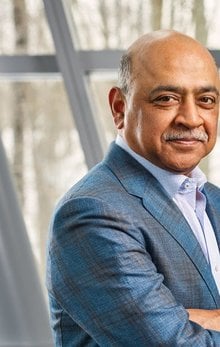
10) IBM
- HQ: US
- CEO: Arvind Krishna
- Founded: 1911
IBM may have pivoted from traditional hardware, but its hybrid cloud and AI focus remain central to hyperscale growth.
Through its IBM Cloud and partnerships with colocation providers, the company underpins critical enterprise workloads with hybrid capabilities and secure environments.
IBM’s approach prioritises open standards, data sovereignty and quantum computing integration, appealing to global enterprises seeking flexibility alongside robust performance and governance.
9) Bytedance
- HQ: China
- CEO: Liang Rubo
- Founded: 2012
Best known for TikTok, Bytedance is emerging as an infrastructure powerhouse.
Its data centre operations in China and overseas support vast content distribution, low-latency video delivery and AI recommendation engines.
The company invests heavily in energy-efficient hyperscale campuses and has expanded into custom chip development to reduce compute cost and power draw.
For data centre professionals, Bytedance’s rapid buildout reflects the rise of content-driven hyperscalers beyond traditional cloud providers.
8) Oracle
- HQ: US
- CEO: Clay Magouyrk and Mike Sicilia
- Founded: 1977
Oracle’s cloud transformation has accelerated through its Generation 2 Cloud Infrastructure, built to support mission-critical, high-performance workloads.
The company’s data centre footprint now spans more than 45 cloud regions, with interconnect partnerships to enhance low-latency enterprise connectivity.
Oracle’s focus on sovereign cloud zones and energy-efficient architecture demonstrates its commitment to regulated industries and sustainable hyperscale growth across global markets.
7) Apple

- HQ: US
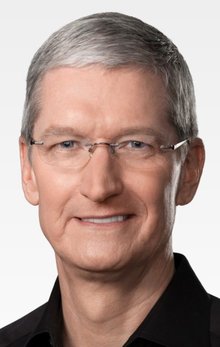
- CEO: Tim Cook
- Founded: 1976
While not a public cloud provider, Apple is a hyperscaler in infrastructure scale, powering its global services – from iCloud to Apple Music – through vast data centre campuses.
Its facilities are among the world’s most sustainable, supported entirely by renewable energy.
Apple’s continued investment in hyperscale expansion, AI compute and environmental innovation positions it as a leader in green infrastructure integration, setting standards in power efficiency and responsible operations.
6) Tencent
- HQ: China
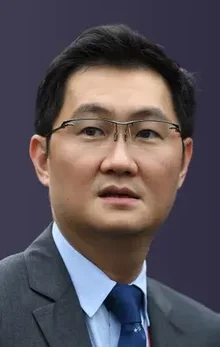
- CEO: Ma Huateng
- Founded: 1998
i operates one of the largest hyperscale networks in Asia, supporting its digital ecosystem spanning gaming, fintech and cloud computing.
Tencent Cloud continues to gain global traction, with data centres optimised for high bandwidth and real-time data analytics.
Its Green Cloud initiative and energy-conscious cooling systems illustrate leadership in sustainable expansion.
For the hyperscale market, Tencent’s diversification underscores the strength of Chinese cloud infrastructure innovation.
5) Alibaba
- HQ: China
- CEO: Eddie Wu
- Founded: 1999
Alibaba Cloud is the leading hyperscaler in Asia-Pacific, with operations spanning more than 25 regions globally.
The company’s data centres combine liquid cooling, renewable integration, and custom processing units to boost efficiency for AI-driven workloads.
Alibaba’s emphasis on carbon neutrality and advanced security aligns with global sustainability goals, making it a strategic counterpart to Western hyperscalers in the evolving multicloud landscape.
4) Meta
- HQ: US
- CEO: Mark Zuckerberg
- Founded: 2004
Meta’s hyperscale infrastructure is built to handle colossal AI and social network workloads.
Its recent focus on AI Research SuperClusters and custom-designed data centre architectures illustrates Meta’s technical maturity.
Each facility prioritises operational efficiency, modular scalability and liquid cooling innovation.
With a roadmap toward net-zero emissions, Meta exemplifies how sustainability and compute intensity can coexist in next-generation hyperscale design.
3) Google Cloud
- HQ: US
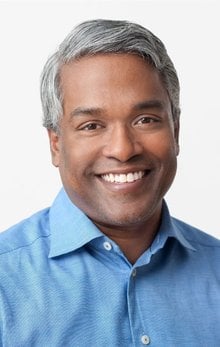
- CEO: Thomas Kurian
- Founded: 1998
Google Cloud drives hyperscale innovation through AI-enhanced operations and carbon-free energy targets.
The company’s data centres are nearly unmatched in energy efficiency, powered by real-time telemetry and advanced cooling systems.
Google’s investment in renewable procurement, custom Tensor Processing Units (TPUs) and edge infrastructure ensures it continues setting performance and sustainability benchmarks.
For industry observers, Google Cloud’s integration of AI and sustainability defines hyperscale’s future direction.
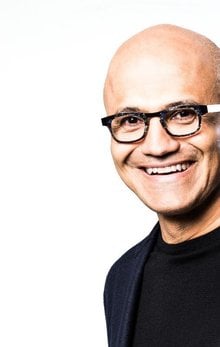
2) Microsoft Azure
- HQ: US
- CEO: Satya Nadella
- Founded: 1975
Microsoft Azure remains one of the fastest-growing hyperscale platforms, supporting AI acceleration, hybrid architectures and sovereign cloud solutions.
With over 60 data centre regions globally, Azure focuses on efficiency through innovations like liquid immersion cooling and AI-driven energy management.
Its commitment to being carbon negative by 2030 has influenced data centre design worldwide.
Azure’s enterprise integration, regulatory compliance, and deep sustainability strategy make it a cornerstone of global digital expansion.
1) Amazon Web Services (AWS)
- HQ: US
- CEO: Matt Garman
- Founded: 2006
AWS continues to dominate the hyperscale sector with unmatched scale and innovation.
Operating hundreds of data centres worldwide, AWS drives advancements in modular facility design, custom chip development and renewable-powered operations.

Its sustainability programme targets 100% renewable energy and water-positive status by 2030.
Beyond market dominance, AWS’s investment in AI infrastructure and local zone expansion underscores its central role in shaping the global cloud and data centre ecosystem.
Company portals








Executives
Arvind Krishna
CEO

Clay Magouyrk
CEO

Eddie Wu
CEO
Ma Huateng
CEO

Mark Zuckerberg
CEO

Mike Sicilia
Chief Executive Officer
Satya Nadella
Chairman and CEO
Thomas Kurian
CEO
Tim Cook
Executive Chairman