What is CoreWeave and DataVita's AI Data Centre Challenge?
What does it take to power the UK's next generation of AI data centres?
As demand for AI infrastructure grows, it might come as a surprise that the answer is beyond electricity generation.
It may actually lie in the supply chains that deliver the equipment needed for grid connections.
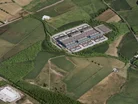
When the UK Government announced plans for an £8.2bn (US$11bn) AI data centre campus in Lanarkshire, led by CoreWeave and DataVita, it presented the project as a boost for the UK's AI ambitions and Scotland's renewable energy sector.
The development is planned to deliver up to 1GW of power capacity, making it one of the UK's largest AI infrastructure projects.
However, an investigation by The Guardian raised questions over whether the campus can meet its target completion date of 2030.
The report focused on a specific challenge that data centre operators now face: securing the electrical infrastructure needed to connect new capacity in the era of AI demand.

Equipment procurement becomes a strategic priority
Obtaining a grid connection is only one stage in delivering a new facility.
Before electricity reaches a campus, developers also need transformers, switchgear and high-voltage cables.
These components are essential pieces of electrical infrastructure that enable power to move safely and reliably from the transmission network into a data centre.
Demand for this equipment is rising across multiple industries at the same time.
According to Montel's 2025 curtailment report, Scottish wind farms received around £343m (US$459m) during 2025 to reduce electricity generation because the grid cannot absorb all available renewable power.
Organisations seeking new grid connections are also encountering extended lead times for critical equipment.
Wood Mackenzie estimates average transformer lead times now reach 128 weeks, while some orders extend beyond four years.
The research company also reports transformer prices have increased by 77% since 2019.
For data centre developers, this places greater emphasis on planning procurement well in advance of construction.
Shilpika Gautam, Founder and CEO of energy infrastructure company Opna, explains where the industry is encountering pressure.
“The massive investment in grid upgrades to support Scotland's data centres is being hindered by a shortage of critical power equipment,” she says.
“Network operators, who buy in bulk and have long-term agreements with manufacturers, get priority for these supplies.
“As a result, when a data centre orders equipment, it's pushed to the back of a four-year waitlist. Grid expansion and data centre development compete for the same resources, while only network operators have reliable access to manufacturers.
“Connecting to the grid is the bottleneck, but procuring critical power equipment is the bottleneck of the bottleneck; few are addressing it.”
The massive investment in grid upgrades to support Scotland's data centres is being hindered by a shortage of critical power equipment
Collaboration offers a route forward
Scotland's electricity network operators are investing heavily in transmission infrastructure, creating additional demand for the same electrical equipment.
SP Energy Networks, for example, began a £12bn (US$16bn) programme to reinforce central and southern Scotland's transmission network, including 12 major substations supported by a supply chain framework worth up to £5.4bn (US$7.2bn) over the next decade.
Meanwhile, SSEN Transmission plans to invest at least £22bn (US$29bn) across northern Scotland by 2031 and launches a further £7.4bn (US$9.9bn) procurement framework.
Together, more than £30bn (US$40bn) of grid investment relies on the same manufacturing base supplying private sector data centre developments.
According to Shilpika, this creates a competitive procurement environment.
“The tens of billions of pounds of grid upgrades meant to unblock Scotland's data centres are being bought from the same transformer and switchgear order books those data centres need,” she explains.
“Network operators are bulk buyers with multi-year framework agreements; manufacturers allocate scarce production slots to them first.
“A single data centre project arriving with a one-off order goes to the back of a four-year book.
“Grid expansion and data centre growth are now competing for the same equipment, and only one side of that competition has a standing seat at the manufacturers' table.
Grid expansion and data centre growth are now competing for the same equipment, and only one side of that competition has a standing seat at the manufacturers' table
Supply chain coordination supports future expansion
While The Guardian reports that internal government correspondence raises concerns about power provision for the Lanarkshire campus, the government told the newspaper the site will connect to the electricity grid and that its energy requirements will still be met overwhelmingly through renewable sources.
Speaking during a panel discussion at Data Centre LIVE in May, Lonnie Salmon, Senior Director at Jabil, argued that electricity generation itself is not the primary issue.
“The UK can generate more electricity than it ever needs,” Lonnie said.
“The problem is not generating the power. The problem is getting it from point A to point B.”
He said stronger coordination across suppliers offers the clearest path to supporting AI infrastructure growth.
“Within this new environment of AI, the need for orchestration across the whole environment becomes paramount,” he said.
“It’s not price, and it’s not efficiency. It’s a collaboration across our whole supply network, end-to-end, which is paramount in this game.”
Jamie Allen, Head of Site Selection at Iron Mountain, shared that assessment.
“We definitely have enough generation,” he said.
“I don't think anyone would say there's an issue with the amounts of electrons that are in the UK. It's just so strenuous to build that route down to where we actually need that power.”
For developers including CoreWeave and DataVita, delivering large-scale AI campuses depends on integrating procurement and infrastructure planning alongside traditional site selection and energy strategy.
Company portals





Executives
Jamie Allen
Head of Site Acquisition, EMEA
Lonnie Salmon
Senior Director Procurement & Supply Chain Services

Shilpika Gautam
Founder and CEO