Will China vs Nvidia AI Chip Race Shift Data Centre Power?
China is intensifying efforts to reduce reliance on US semiconductor technology, with domestic chipmakers now challenging Nvidia’s lead in AI hardware.
The growing competition holds major implications for global data centre operations, where chip performance, energy use and supply chain resilience define long-term strategy.
The challenge gained traction after DeepSeek’s 2024 launch of a ChatGPT rival, which temporarily dented Nvidia’s market value. The company stunned the sector by showing that its AI models could train using far fewer high-end chips than competitors, signalling a change in how efficiently AI workloads could run in data centres.
Domestic chipmakers step up production
Chinese firms are now accelerating semiconductor innovation to match Nvidia’s performance levels while reducing power consumption. In September, Alibaba introduced a new AI chip that state media claimed equals Nvidia’s H20 processors but uses less energy. These H20 chips are a scaled-down version produced under US export restrictions for the Chinese market, making Alibaba’s launch a symbolic and technical milestone for local development.
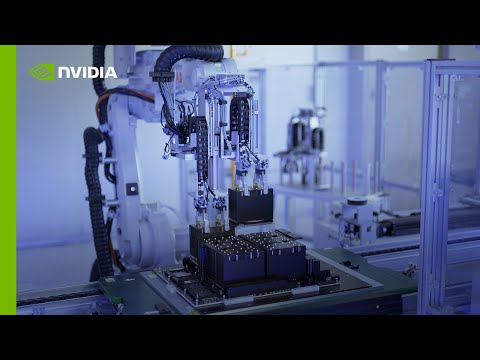
Huawei also announced what it calls its most powerful chips to date, part of a three-year plan to rival Nvidia’s position in the global market. The company says it will open its designs and software to other firms in China, aiming to strengthen domestic supply chains and move businesses away from US hardware.
A spokesperson for Nvidia admits that competition is now heating up. “The competition has undeniably arrived,” the spokesperson tells the BBC, adding that Nvidia will “continue to work to earn the trust and support of mainstream developers everywhere.”
This shift coincides with major domestic contracts across China. MetaX, not connected to Meta or X, now supplies advanced chips to China Unicom, a leading state-owned telecoms operator. Cambricon Technologies, based in Beijing, has seen its Shanghai-listed shares double in value over three months, reflecting growing investor confidence in home-grown AI hardware.
Data centre performance still under review
Despite this surge in production, analysts question the performance data coming from Chinese manufacturers due to limited transparency and inconsistent benchmarking. These details matter deeply for the data centre sector, where even minor inefficiencies in chip architecture can translate into major costs in energy use and cooling demand.
Computer scientist Jawad Haj-Yahya, who has tested both US and Chinese semiconductors, says the two perform similarly for predictive AI tasks but diverge in complex analytics. “The gap is clear and it is surely shrinking. But I don’t think it’s something they [China] will catch up on in the short-term,” he explains.
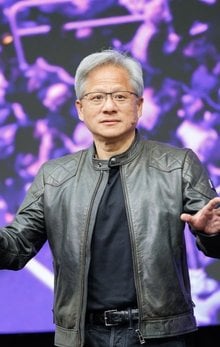
Nvidia’s CEO Jensen Huang, speaking on the BG2 podcast, describes the race as extremely close. He argues that China is just “nanoseconds behind” the US in chip design and development, and calls on the US to compete “for its survival,” praising China’s “vibrant entrepreneurial, high-tech, modern industry”.
For global data centres, these comments highlight the growing parity between Western and Chinese computing ecosystems. If Chinese chips achieve comparable power efficiency and performance, multinational operators could diversify procurement and reduce exposure to export controls.
Strategy, supply chains and global competition
Industry experts suggest that Beijing’s semiconductor announcements may also serve a diplomatic purpose. Computing professor Chia-Lin Yang from National Taiwan University calls them a “bargaining chip” in ongoing trade discussions with the US, as China seeks to leverage its market size to secure better terms for technology imports.
Still, the US remains the source of the most advanced data centre processors. Semiconductor engineer Raghavendra Anjanappa says China can already manufacture chips suitable for less complex systems but lacks the “raw performance” needed to train the largest AI models.
US export controls continue to block China’s access to Nvidia’s top-tier chips. Raghavendra says the US has “hit China exactly where its dependency is deepest”. However, he also warns that the gap may not last long, adding: “But China’s not far off in the grand scheme and they might only need five more years to be independent from the US.”
President Xi Jinping has publicly reinforced this goal, calling for a stronger domestic technology base and investment of tens of billions of dollars into “high-quality development.” The result is a race that extends far beyond semiconductors, influencing the architecture and scale of data centres worldwide.
For operators, the outcome could reshape everything from hardware procurement to regional hosting strategies. As China’s chipmakers close the performance gap and US suppliers protect their lead, the world’s data infrastructure stands on the edge of a major transition.
Company portals



Executives
Jensen Huang
Founder and CEO