Top 10: AI Cloud Companies

The AI revolution has fundamentally reshaped the cloud computing landscape, transforming data centre infrastructure from simple storage solutions into sophisticated AI-powered platforms.
As enterprises race to harness generative AI, machine learning and advanced analytics, a select group of technology giants dominate the global market. The companies have invested hundreds of billions in data centre expansion, proprietary chips and AI development to meet unprecedented demand. Global cloud infrastructure spending reached US$99bn in Q2 2025, marking a 25% year-over-year increase, fuelled primarily by AI workloads.
From hyperscalers commanding the majority of market share to specialised platforms enabling data-driven transformation.
This week Data Centre Magazine explores the top 10 companies defining the future of enterprise technology and reshaping how organisations leverage computing power at scale.
10. Tencent
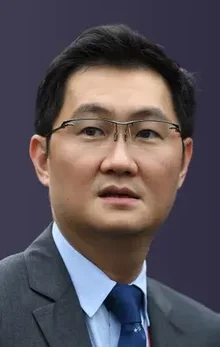
CEO: Ma Huateng
Founded: 1998
Location: Shenzhen, China
Tencent, co-founded by Ma Huateng, operates Tencent Cloud, launched in 2013. The platform delivers compute, data analytics and AI to enterprises in China and abroad, leveraging Tencent’s ecosystem of WeChat and gaming. Heavy investment in AI underpins the Hunyuan large language models used across services.
With data centres in multiple regions, Tencent Cloud supports millions of users and undergirds China’s digital infrastructure. It competes fiercely with Alibaba Cloud and global hyperscalers targeting China while expanding its international AI cloud footprint.
9. Alibaba Cloud
CEO: Eddie Wu
Founded: 2009
Location: Hangzhou, China
Eddie Wu became Alibaba Group CEO in September 2023, overseeing Alibaba Cloud, founded in 2009 under Jack Ma with Wang Jian. Alibaba Cloud leads Asia-Pacific, delivering cloud computing, AI and data intelligence worldwide.
In 2025 it pledged US$52.7bn to build a unified global cloud network spanning Japan, South Korea, Southeast Asia, the Middle East, Europe and the Americas. AI product revenue has grown triple digits for seven straight quarters. Its infrastructure supports Chinese firms globally and attracts international entrants.
8. Snowflake
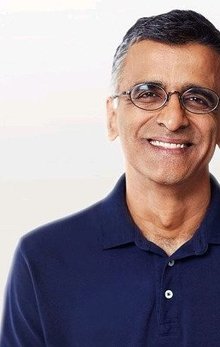
CEO: Sridhar Ramaswamy
Founded: 2012
Location: Bozeman, Montana, United States
Sridhar Ramaswamy became Snowflake CEO in February 2024, succeeding Frank Slootman. Founded in 2012 by Benoît Dageville, Thierry Cruanes and Marcin Żukowski, Snowflake pioneered a cloud data platform unifying warehousing, lakes and engineering.
Operating across AWS, Microsoft Azure and Google Cloud, it offers multi-cloud flexibility. Under Ramaswamy, Snowflake has accelerated its AI push with Cortex AI, embedding large language models, vector search and machine learning directly in-platform.
Serving 10,000+ customers and processing 4.2bn queries, Snowflake enables enterprise-grade, AI-powered analytics worldwide.
7. Salesforce
CEO: Marc Benioff
Founded: 1999
Location: San Francisco, California, United States
Founded on 8 March 1999 by Marc Benioff, Parker Harris, Dave Moellenhoff and Frank Dominguez, Salesforce is a cloud leader integrating customer relationship management, data and AI.
Led by CEO and chairman Benioff, it delivers AI Cloud with Einstein and the new Agentforce to automate service, sales and marketing. The platform unifies Data Cloud, analytics and security for enterprise use at scale. Salesforce reported US$31.352bn revenue in fiscal 2023 and continues to expand AI capabilities for regulated industries and enterprises.
6. Oracle
CEO: Clay Magouyrk and Mike Sicilia
Founded: 1977
Location: Austin, Texas, United States
Founded in 1977 by Larry Ellison, Bob Miner and Ed Oates, Oracle now runs Oracle Cloud Infrastructure under co-CEOs Clay Magouyrk and Mike Sicilia. OCI powers mission-critical databases and AI workloads, winning major government and enterprise contracts.
Partnerships with Nvidia bring Blackwell GPUs and NVIDIA AI Enterprise to OCI for training and inference. In September 2025 Oracle reported US$455bn in remaining performance obligations, signalling strong demand. Safra Catz moved to executive vice chair as Oracle doubled down on AI-first cloud.
5. IBM
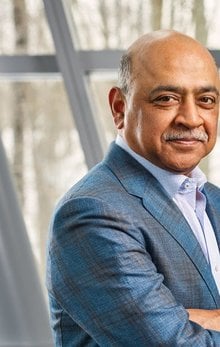
CEO: Arvind Krishna
Founded: 1911
Location: Armonk, New York, United States
Arvind Krishna became IBM CEO in April 2020 and chairman in January 2021. Founded in 1911, IBM has evolved into a hybrid cloud and AI leader.
Krishna oversaw the US$34bn Red Hat acquisition, defining the hybrid cloud market. IBM helps enterprises modernise applications and deploy AI across on-premises and multi-cloud estates.
Watson and watsonx generative AI toolkit support training, tuning and deployment on confidential data. With 12 labs across 19 sites, IBM serves regulated industries needing security, compliance and support.
4. Nvidia
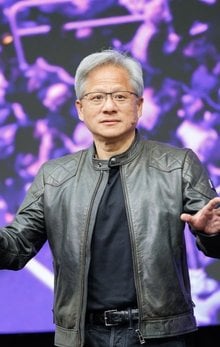
CEO: Jensen Huang
Founded: 1993
Location: Santa Clara, California, United States
Jensen Huang co-founded Nvidia in 1993 and has led it since inception. With Chris Malachowsky and Curtis Priem he created the 1999 GPU that transformed computing. Today Nvidia anchors AI cloud infrastructure: hyperscalers buy H100 and H200 accelerators, while CUDA and a full AI software stack power large language models and generative applications. Through DGX Cloud and enterprise platforms, Nvidia delivers AI training and inference as a service and extends into autonomous systems, making it a backbone for industry-wide transformation.
3. Google Cloud
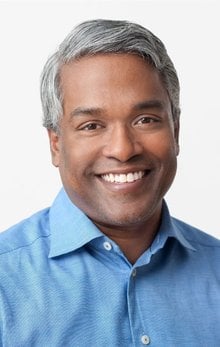
CEO: Thomas Kurian
Founded: 1998 (Google); 2008 (Google Cloud)
Location: Mountain View, California, United States
Founded in September 1998, Google later launched Google Cloud Platform, now around 13% of the global market as the third-largest provider. Under Thomas Kurian, Google Cloud sharpened its enterprise focus, reorganised sales and expanded partnerships.
Strengths include data analytics, AI and machine learning via TensorFlow, BigQuery and Vertex AI. Q2 2025 revenue rose 32% year over year to US$13.6bn, outpacing the market. Gemini models and comprehensive AI infrastructure are attracting enterprises, positioning Google Cloud as a formidable challenger to incumbents.
2. Microsoft Azure
Leader: Scott Guthrie
Founded: 1975 (Microsoft); 2010 (Azure)
Location: Redmond, Washington, United States

Scott Guthrie is Executive Vice President for Cloud and AI at Microsoft, leading Azure since 2014. Founded in 1975 by Bill Gates and Paul Allen, Microsoft launched Azure in 2010.
Azure holds about 20% of the global cloud market, the primary challenger to AWS. Revenue grew 39% year on year in Q2 2025, more than double AWS’s rate. A deep partnership with OpenAI places Azure at the centre of generative AI, running ChatGPT and model APIs on its infrastructure.
The portfolio spans infrastructure, platforms, data and AI integrated with Microsoft 365. Strong hybrid cloud, security and alignment with existing Microsoft estates drive enterprise adoption. With US$75bn annual revenue and aggressive AI infrastructure investment, Microsoft serves 95% of Fortune 500 companies.
1. AWS
CEO: Matt Garman
Founded: 2006
Location: Seattle, Washington, United States

Matt Garman became CEO of AWS in June 2024, succeeding Adam Selipsky. Joining in 2005 and becoming the first product manager in 2006, he now leads the market’s largest cloud provider with roughly 30% share.
In Q2 2025 AWS posted US$30.9bn in net sales and US$10.2bn operating income, highlighting scale and profitability.
AWS offers 200+ services across compute, storage, databases, analytics and AI. Heavy investment in custom silicon delivers Graviton for general compute and Trainium for AI training, lowering cost and improving performance.
Bedrock provides access to multiple foundation models, while SageMaker enables building, training and deployment at scale. With data centres across 33 regions and partnerships with leading AI firms including Anthropic, AWS sets the pace for AI infrastructure.
Company portals







Executives
Arvind Krishna
CEO

Clay Magouyrk
CEO

Eddie Wu
CEO
Jensen Huang
Founder and CEO
Ma Huateng
CEO
Marc Benioff
Chair & CEO
Matt Garman
Chief Executive Officer

Mike Sicilia
Chief Executive Officer
Scott Guthrie
Executive Vice President, Cloud + AI Group
Sridhar Ramaswamy
Chief Executive Officer
Thomas Kurian
CEO